
There is a moment, somewhere in the covered corridors of the Mercado Central, when you stop pretending you know where you are going. The smell of aged cheese and sugarcane spirits fills the air. A vendor slides a small glass across the counter without a word.
Somewhere nearby, someone is eating pão de queijo straight from the oven, pulling the warm, elastic dough apart with both hands. You have not been here five minutes, and you already understand why this Belo Horizonte travel guide starts here: not at the airport, not at the famous lake, but in a covered market that has been running since 1929.
Quick Facts About Belo Horizonte
| Location | Minas Gerais, Brazil |
| Population | Approximately 2.7 million people |
| Best Time to Visit | May to September |
| Recommended Stay | 3–4 days |
| Airport | Belo Horizonte/Confins International Airport (CNF) |
| Known For | Pampulha, Mineiro cuisine, Mercado Central, Inhotim, and bar culture |
Belo Horizonte Travel Guide: A City That Doesn’t Know You Arrived
Belo Horizonte — BH to everyone who lives here — is the capital of Minas Gerais state and one of Brazil’s largest cities, with 2.7 million inhabitants and an economy that hums quietly without needing anyone’s attention. International travelers rarely plan for it. Rio gets the postcards, São Paulo gets the business flights, and BH gets the Brazilians who already know. For Belo Horizonte Brazil tourism, this invisibility is precisely the point.
There are no English menus in the neighborhood botecos, no tour buses idling outside the market, no pricing structures built around what foreigners will tolerate.
The city functions for the people who live in it. As a visitor, you move through it on those same terms, and the experience you get is the real one.
What makes BH genuinely unusual among Brazilian cities is a trio of apparent contradictions.
It was Brazil’s first planned capital, inaugurated in 1897 with a rational grid inspired by Washington D.C. and Paris, yet the mountainous terrain of Serra do Curral refused the blueprint — producing steep streets, improbable alleys, and neighborhoods that defy the map’s logic.
It has the highest concentration of bars per capita in the country, yet the mineiro culture around drinking is slow, conversational, and entirely without spectacle.
And it holds a UNESCO World Heritage site and one of the great contemporary art museums of the Americas, yet neither appears on any international list of Brazilian essentials.
The Architecture That Changed Brazil
In the 1940s, a young mayor named Juscelino Kubitschek commissioned a then-unknown architect named Oscar Niemeyer to design a new district around an artificial lagoon on the city’s northern edge.
What emerged at Pampulha was not just a set of buildings: it was the moment Brazilian modernism found its voice before Brasília existed.
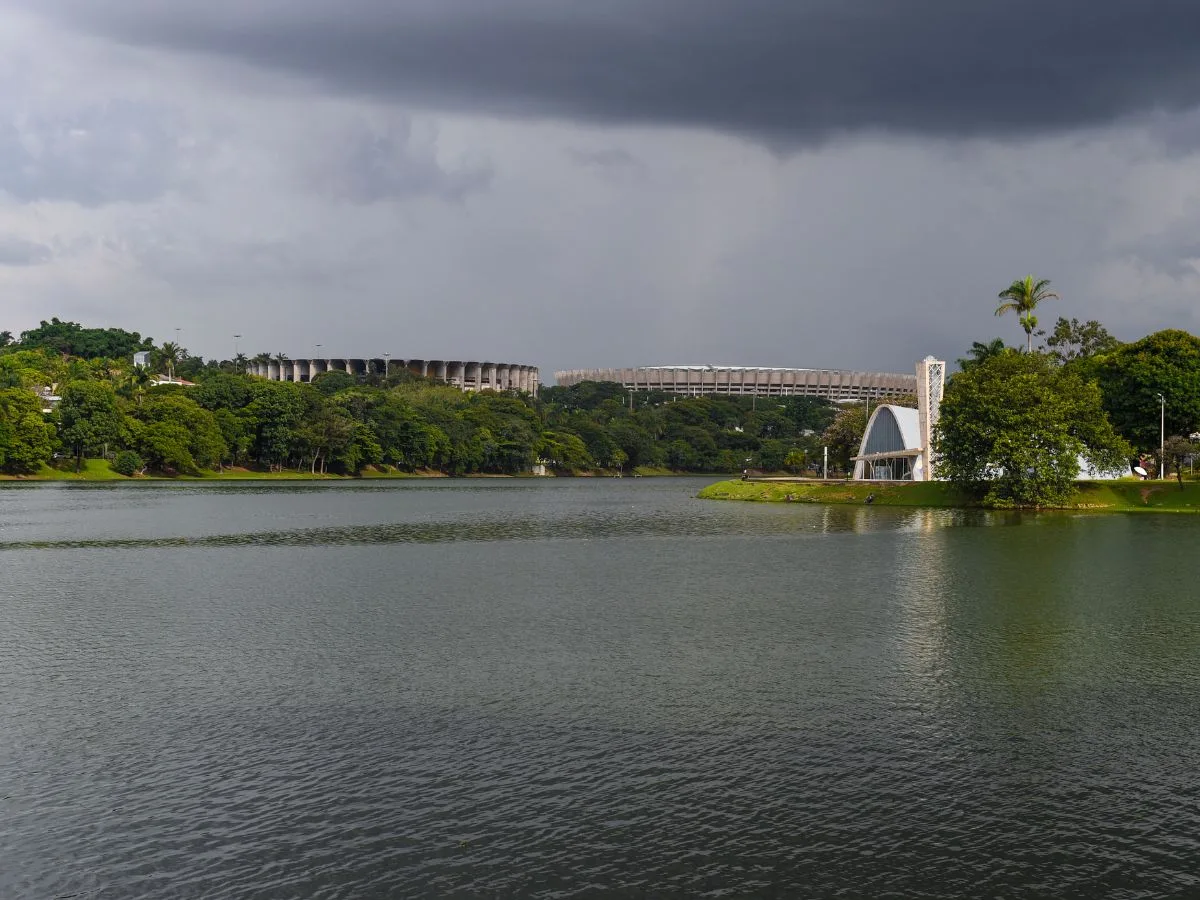
The Church of Saint Francis of Assisi
Its sweeping concrete parabolas sit low against the sky. The entire facade is covered in azulejo panels by Cândido Portinari depicting the saint in expressionist, almost agitated poses.
The Catholic Church refused to consecrate it for sixteen years, finding the design too radical. The building stood, waited, and was declared a UNESCO World Heritage Site in 2016, seventy-three years after construction.
The Rest of Pampulha
The elegant curved structure that now serves as the Museum of Art was designed as a casino, completed in 1942, and never opened as one: the federal government banned gambling the year it was finished.
Roberto Burle Marx — the landscape architect who would later redesign the Copacabana promenade and help shape Brasília’s green spaces — designed the gardens connecting the buildings.
On weekend mornings, families rent bicycles along the lakeside path. Capybaras emerge from the reeds to graze. None of this appears in international travel coverage of Brazil. All of it is free.
Praça da Liberdade and the Cultural Circuit
At the opposite end of the architectural spectrum sits Praça da Liberdade, the most elegant square in the city — and one of the best answers to the question of what to see in Belo Horizonte that doesn’t involve a taxi ride.
The square is lined with century-old imperial palms and flanked by ornate government palaces from the early twentieth century — the kind of building stock that in most Brazilian cities was demolished to make way for parking lots. Here, they were converted into free museums.
The Circuito Liberdade brings together spaces dedicated to memory, science, photography, and contemporary art, all within walking distance of each other. It is the kind of cultural infrastructure that surprises visitors who arrived expecting a purely gastronomic city.
On Sunday mornings, the nearby Avenida Afonso Pena closes to traffic for the Feira de Arte e Artesanato — a market of handmade ceramics, tin work, textiles, and regional food that operates until early afternoon.
It then disappears completely. Arriving after two in the afternoon means finding an empty avenue.
What Mineiro Food Actually Is
The cuisine of Minas Gerais was not invented by chefs. It was assembled over three centuries by people who had to make do: colonial muleteers carrying dried beans and manioc flour across mountain trails, African enslaved people integrating okra and new cooking techniques into Portuguese-derived dishes, isolated farming communities making cheese from raw milk because refrigeration did not exist. If you want to understand the traditional Mineiro dishes that define this region, the history is inseparable from the plate.
Feijão tropeiro — beans cooked dry with bacon, sausage, eggs, and manioc flour — comes from those muleteers who needed a meal that would survive a week on horseback.
Frango com quiabo, chicken slow-cooked with okra until both dissolve into each other, arrived with the enslaved Africans who introduced the vegetable to the region.
Pão de queijo exists because wheat flour was scarce in the colonial interior: cassava starch replaced it, mixed with local cured cheese and eggs, producing something the world has since tried to imitate in factories and mostly failed.
The Format: Lunch and the Boteco
In BH, the main meal is lunch, served as a pay-by-weight buffet where you take a plate, pile it with whatever is in front of you, and hand it to someone to weigh. There is no menu, no decision fatigue, no performance.
In the evenings, the boteco takes over: a bar-counter-and-pavement culture where cold draft beer, small plates, and long conversations are the entire point.
BH is estimated to have more bars per capita than any other city in Brazil. The number cited locally is over twelve thousand. Whatever the real figure, the culture it represents is unhurried, unpretentious, and available on almost any street corner.
Inside the Mercado Central
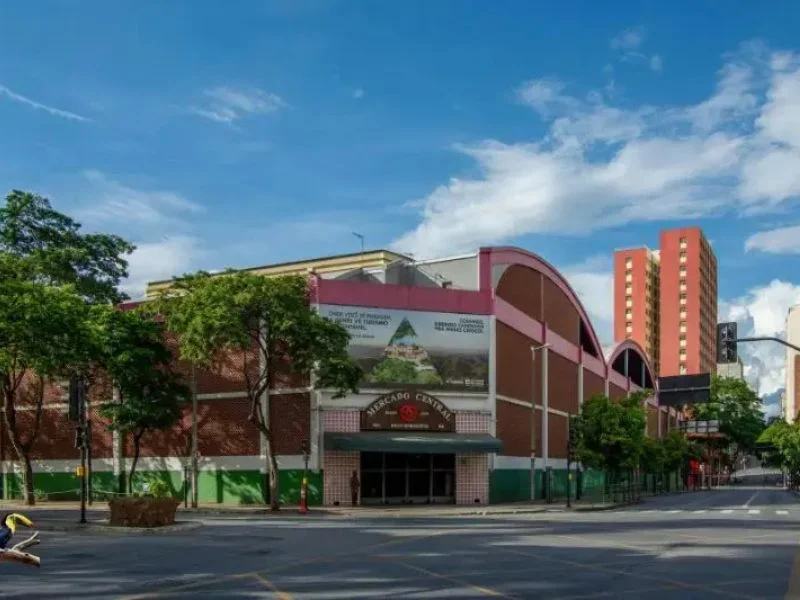
Built in 1929 and expanded over the decades, the Mercado Central is a permanent two-story iron-and-brick structure at the edge of the historic center. Over four hundred stalls have been operating here for generations. It is one of the finest municipal markets in Brazil and the building itself is worth the visit before you buy anything.
The corridors of artisanal cachaça are a serious business: vendors offer a small pour before you commit, and reciprocity is understood.
Aged cheese wheels from the Serra da Canastra and Serro regions carry protected origin designations and come vacuum-packed, cold enough to survive the journey home.
The ground floor runs to petiscos, the small plates that anchor Mineiro bar culture. The house specialties involve offal that locals have been cooking long before it became fashionable elsewhere. If you have never eaten properly seasoned liver, this is a reasonable place to revise that position.
The market also functions as a social hub. At any hour of the morning, regulars occupy the same counter stools they have used for years. No tour is needed and no agenda helps. The correct approach is to walk in, follow the smell, and accept whatever is put in front of you.
Santa Tereza and the City’s Other Face
On a hillside between the center and Savassi sits Santa Tereza, the neighborhood that contradicts everything systematic about BH. The streets are narrow and painted.
The buildings are colonial houses converted into studios, bars, and bakeries by the people who actually live there: not investors anticipating the next wave of gentrification, but artists, musicians, and long-term residents who have occupied the hillside for decades.
The neighborhood’s most underreported feature is the Viaduto Santa Tereza, a concrete viaduct covered in monumental murals with a view of the city that most guidebooks have not found.
On Saturday mornings, the local market operates at street level — a small and genuinely neighborhood affair with regional food, handcraft, and the kind of density that makes you feel like an accidental participant rather than a tourist with a checklist.
The descent toward Lagoinha at night crosses outside the safe perimeter. An Uber out of the neighborhood after dark is the correct decision.
Inhotim: The Museum That Requires a Day
Sixty kilometers west of Belo Horizonte, in the municipality of Brumadinho, sits Inhotim. It is not part of the city, but no honest guide to the region can omit it. The site is the largest open-air contemporary art museum in the world.
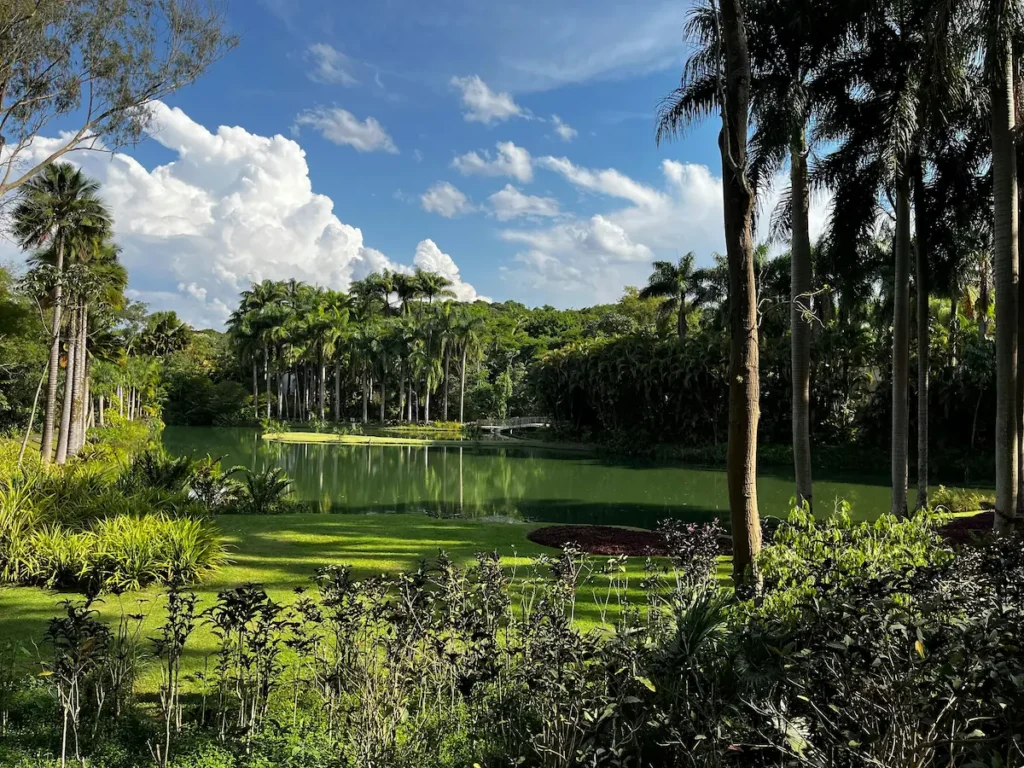
The pavilions are scattered across five hundred hectares of botanical garden. Artists including Cildo Meireles, Doug Aitken, and Chris Burden each have dedicated spaces: not wall-hung works, but full architectural environments built around a single commission.
The gardens connecting them were developed under the influence of Roberto Burle Marx, the Brazilian landscape architect who spent decades arguing that native plants were not a deficiency to be corrected but a resource to be used. His work at Inhotim treats the land as a medium with the same seriousness as the art it contains.
Additional inspiration for exploring the countryside can be found in our guide to rural tourism in Minas Gerais.
The practical reality: Inhotim is a full day, minimum. You walk between eight and twelve kilometers without noticing, because the next pavilion is always visible through the trees.
Buses depart BH in the morning and return in the late afternoon; seats fill. Visitors who try to combine Inhotim with a full BH itinerary in a single weekend end up doing neither properly.
The choice is worth making consciously before you book anything. The museum is closed on Tuesdays.
For tickets and current opening hours, visit the official Inhotim website.
Getting Around and Getting Your Bearings
The practical geography of BH for visitors is manageable once you accept that Uber is the default mode of transport. The city is large and hilly in ways that make walking between neighborhoods impractical.
Public transit exists — including a single metro line with nineteen stations — but it requires local knowledge to navigate efficiently. The Visit Brasil portal has updated transport and accessibility information for the city.
Neighborhoods to Know
The areas that matter most for those planning things to do in Belo Horizonte cluster into a manageable mental map. Savassi and Lourdes, to the south of the center, are where most good hotels sit and where the bar and restaurant scene is densest — this is where you base yourself.
The historic center holds the Mercado Central and the Museum of Arts and Crafts, installed inside the old train station. Pampulha is about twenty minutes north by car. Santa Tereza sits on a hillside between the center and Savassi.
One honest limitation: the center and surrounding areas empty quickly after eight in the evening. What is a busy commercial district at noon becomes a different kind of street by nine.
The advice is not to avoid the center — the Mercado Central and Praça da Liberdade are daytime destinations worth the trip. Be in Savassi when it gets dark, not still navigating the hipercentro.
When to Visit Belo Horizonte
The dry season, from May through September, is the window that makes the most sense to visit Belo Horizonte. Temperatures sit between 18°C and 26°C (64°F–79°F) and skies are reliable.
The outdoor elements — the lakeside cycling at Pampulha, the Sunday market on Afonso Pena, the panoramic view from Parque das Mangabeiras at sunset — deliver what they promise.
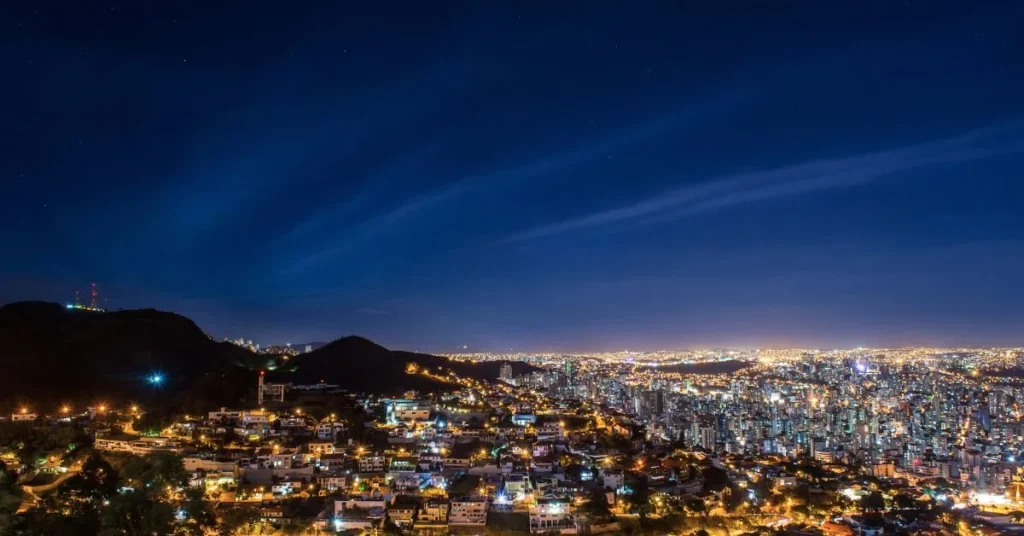
The Mangabeiras park, perched on the Serra do Curral that forms BH’s southern wall, offers the most honest image of what the city actually is: not a coastal metropolis but a city wedged into a natural amphitheater of mountains.
The view at dusk, when the city lights begin filling the valley below, is the kind of thing that takes a moment to process. Getting there requires a car or Uber; it is not accessible on foot from the center, despite what the map might suggest.
Comida di Buteco (April–May)
In April and May, the Comida di Buteco festival transforms the boteco circuit into a structured tour: participating bars each serve one exclusive petisco, judged by the public over three to four weeks.
For the visitor who arrives during those months, it is the most efficient way to move through the city’s bar culture in a short time — four or five bars in a Savassi afternoon, each one a different dish, the same cold beer, the same unhurried conversation. It is also one of the most distinctive popular festivals in Brazil that a first-time visitor can experience without a single word of Portuguese.
Frequently Asked Questions About Belo Horizonte
Is Belo Horizonte worth visiting?
Yes. Belo Horizonte offers a different side of Brazil, focused on gastronomy, local culture, architecture, and everyday life rather than beaches or large tourist attractions.
How many days should I spend in Belo Horizonte?
Most visitors should plan three to four days to explore Pampulha, Mercado Central, Praça da Liberdade, Savassi, and Inhotim comfortably.
Is Belo Horizonte safe for tourists?
The main tourist areas are generally safe during the day. Visitors should follow the same precautions recommended in any large Brazilian city and use ride-hailing services when moving between neighborhoods at night.
What food should I try in Belo Horizonte?
Traditional favorites include pão de queijo, feijão tropeiro, frango com quiabo, local cheeses, and artisanal cachaças.
When is the best time to visit Belo Horizonte?
The dry season, from May through September, usually offers the most pleasant weather for sightseeing, outdoor activities, and day trips.
The morning you finally find the pão de queijo that matches everything you were told about it — hot, elastic, with the right ratio of polvilho and cured cheese — you will understand why no exported version has ever been adequate.
Some things do not travel. Belo Horizonte is one of them — and this Belo Horizonte travel guide exists precisely because the city is worth the trip it takes to explain.